SEO Title: Assam Floods 2026: Causes, Impact, Relief Efforts & Latest Updates
Meta Description: Learn about the Assam floods in 2026, including their causes, impact on people and wildlife, government relief efforts, and long-term solutions to reduce flood damage.
Assam Floods 2026: A Growing Challenge
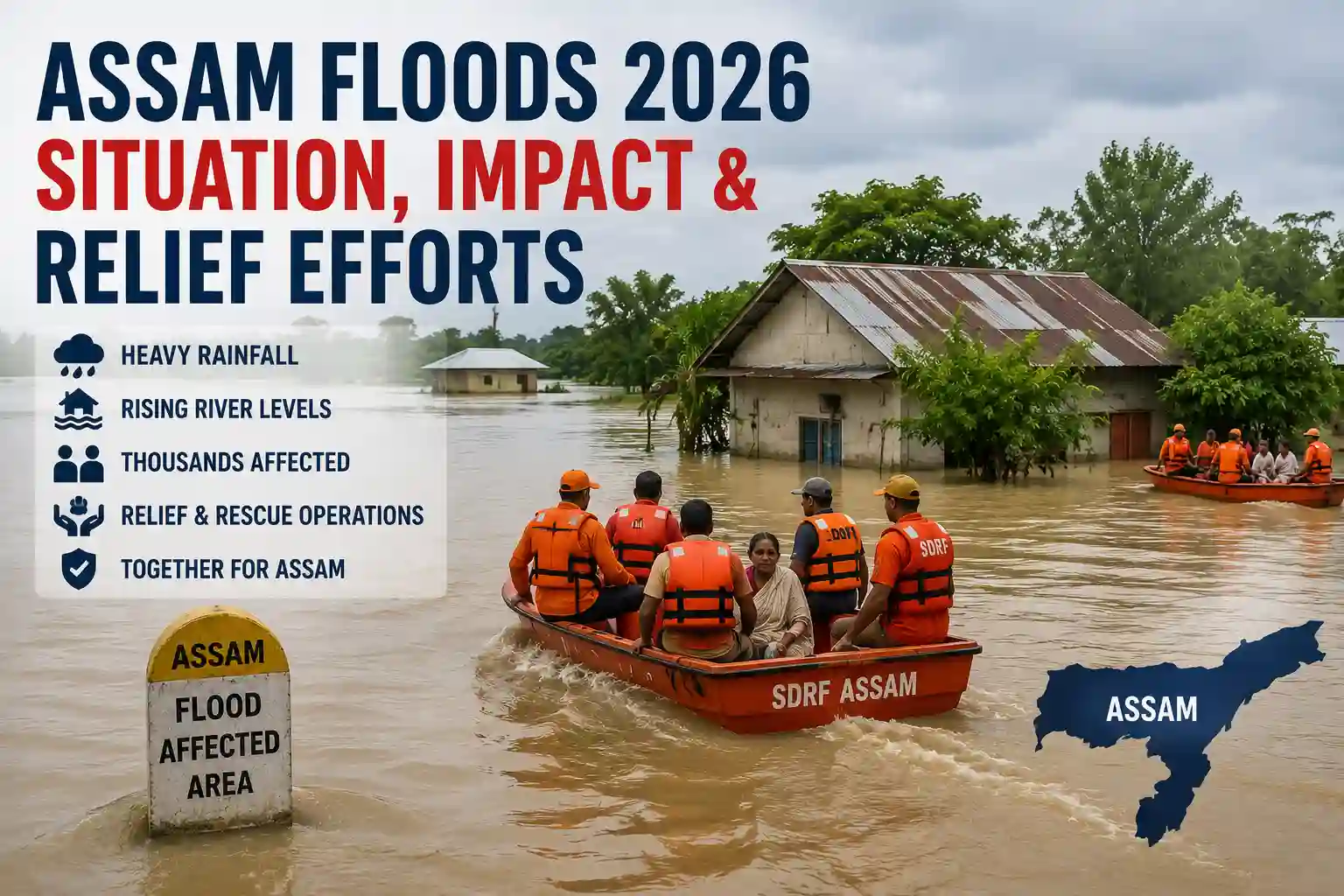
Every year, Assam faces severe flooding during the monsoon season, affecting millions of people across the state. In 2026, heavy rainfall and rising river levels once again caused widespread flooding, damaging homes, roads, farmland, and public infrastructure. Thousands of families were forced to leave their homes and move to temporary relief camps, while rescue teams worked around the clock to assist those stranded in flood-affected areas.
Floods have become one of the biggest natural challenges for Assam, making disaster preparedness and long-term flood management more important than ever.
Why Does Assam Experience Floods Every Year?
Several natural and environmental factors contribute to recurring floods in Assam.
Heavy Monsoon Rainfall
The state receives intense rainfall between June and September. Continuous rain quickly increases the water level in rivers, leading to overflow.
The Brahmaputra River
The Brahmaputra is one of the largest rivers in Asia. During the monsoon, it carries massive volumes of water from the Himalayas. When rainfall is exceptionally high, the river and its tributaries overflow, flooding nearby villages and towns.
Riverbank Erosion
Strong river currents gradually erode riverbanks, destroying agricultural land and forcing many families to relocate.
Climate Change
Experts believe that changing weather patterns are increasing the frequency of extreme rainfall events, making floods more severe than in previous decades.
Impact on People
Floods affect almost every aspect of daily life.
- Thousands of homes are damaged or submerged.
- Schools and colleges remain closed in many districts.
- Road and rail transport is disrupted.
- Drinking water becomes contaminated.
- Crops and livestock suffer heavy losses.
- Local businesses face financial setbacks.
Many families lose their primary source of income, making recovery difficult even after floodwaters recede.
Impact on Wildlife
Assam is home to world-famous wildlife reserves, including Kaziranga National Park. Floodwaters often force animals to leave protected areas in search of higher ground.
During severe floods:
- Deer, wild boars, rhinos, and elephants move toward nearby villages.
- Wildlife rescue teams relocate injured animals.
- Some animals are killed while crossing highways.
- Natural habitats remain underwater for several days.
Conservation agencies continue working to protect wildlife during the flood season.
Government Relief Efforts
State and central authorities usually launch emergency relief operations as soon as flood conditions worsen.
Relief measures include:
- Evacuation of affected families
- Distribution of food and clean drinking water
- Medical camps for flood victims
- Temporary shelters and relief camps
- Rescue operations using boats and helicopters
- Restoration of roads and electricity
Volunteers, local organizations, and disaster response teams also play an important role in helping affected communities.
How People Can Stay Safe During Floods
Residents living in flood-prone areas should take precautions such as:
- Follow official weather and flood warnings.
- Keep emergency medicines and important documents in waterproof bags.
- Avoid crossing flooded roads or bridges.
- Drink only safe and clean water.
- Move to higher ground when advised by local authorities.
- Keep emergency contact numbers readily available.
Preparedness can significantly reduce the risk to life and property.
Long-Term Solutions
While emergency relief is essential, long-term planning is equally important.
Possible solutions include:
- Strengthening embankments along major rivers.
- Improving flood forecasting systems.
- Restoring wetlands that naturally absorb excess water.
- Better urban drainage infrastructure.
- Large-scale tree plantation to reduce soil erosion.
- Planned development in flood-prone regions.
Combining modern technology with sustainable environmental practices can help reduce future flood damage.
Conclusion
The Assam floods of 2026 once again highlighted the state’s vulnerability to extreme weather and rising river levels. Although rescue agencies and government departments continue to provide timely assistance, long-term flood management remains the key to protecting lives, livelihoods, and the environment. Greater investment in disaster preparedness, infrastructure, and climate resilience will help Assam face future monsoon seasons more effectively.