Introduction
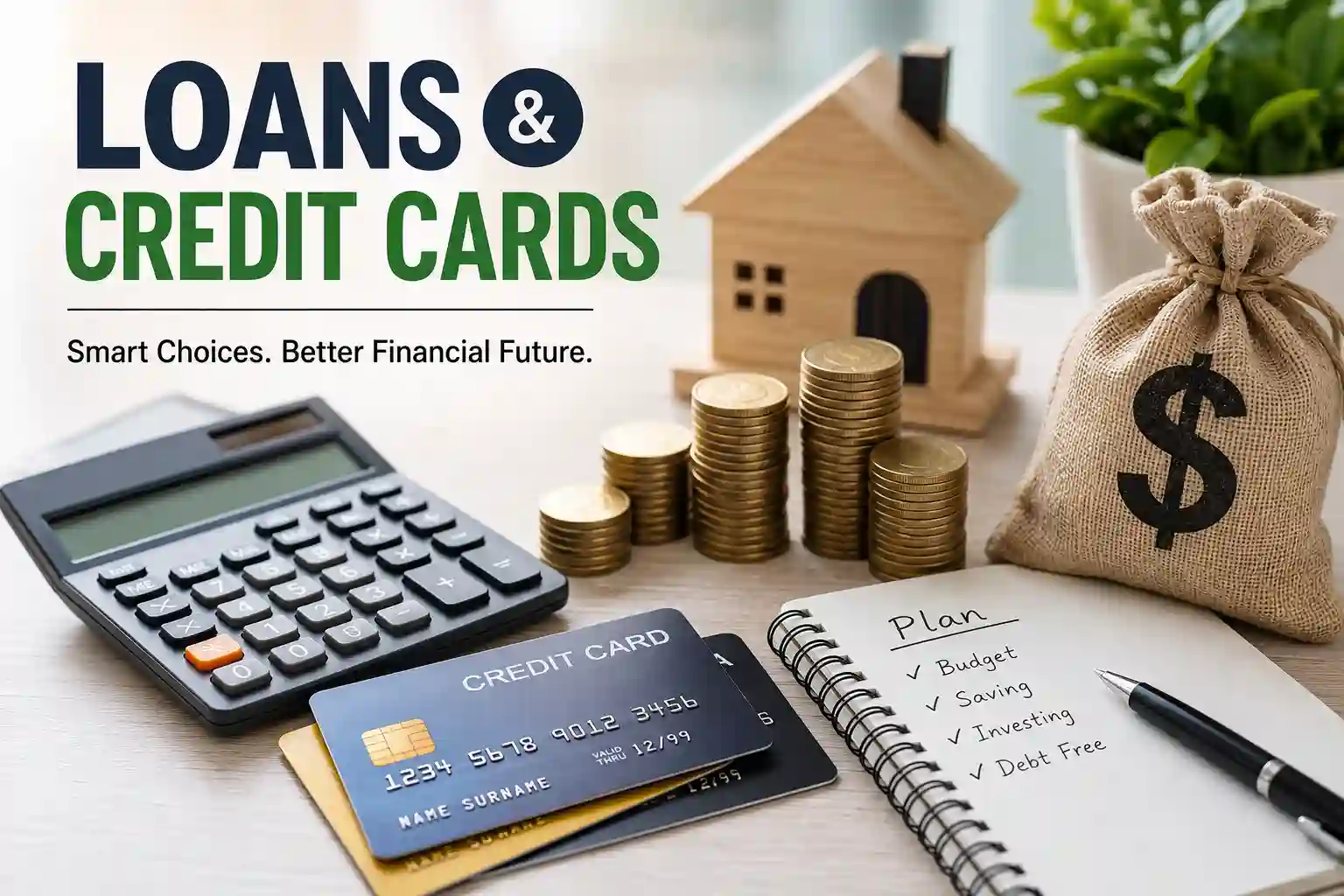
Whether you’re buying your first home, financing a car, paying for college, or simply covering everyday expenses, loans and credit cards can be valuable financial tools. Millions of Americans rely on them every day to manage their finances and achieve important life goals.
However, borrowing money also comes with responsibility. If you don’t understand how loans or credit cards work, it’s easy to accumulate debt, pay unnecessary interest, or damage your credit score.
In this guide, you’ll learn the differences between loans and credit cards, how they work, their benefits and drawbacks, and practical strategies for borrowing responsibly.
What Is a Loan?
A loan is money you borrow from a bank, credit union, online lender, or other financial institution. After receiving the funds, you agree to repay the borrowed amount plus interest over a specific period.
Unlike a credit card, a loan provides a lump sum upfront. You’ll typically make fixed monthly payments until the balance is completely paid off.
People use loans for many different reasons, especially when they need funding for larger expenses that would be difficult to pay all at once.
Common Types of Loans
Personal Loans
Personal loans are among the most flexible borrowing options because they can be used for almost any legitimate purpose. Many borrowers use them for:
- Home renovations
- Medical bills
- Debt consolidation
- Weddings
- Vacations
- Emergency expenses
Because these loans usually have fixed payments, they’re easier to budget for than revolving debt.
Home Loans (Mortgages)
A mortgage helps people purchase a home without paying the full purchase price upfront. Most mortgages are repaid over 15 to 30 years through monthly payments that include both principal and interest.
The property itself serves as collateral, which means the lender can take ownership if the borrower fails to make payments.
Auto Loans
Auto loans make it possible to purchase a new or used vehicle by spreading the cost over several years. The repayment period usually ranges from three to seven years, depending on the lender and loan agreement.
Student Loans
Student loans are designed to help pay for higher education expenses such as tuition, textbooks, housing, and other educational costs. Many borrowers begin repayment after completing school or leaving college.
Business Loans
Business loans provide financing for entrepreneurs and companies that need capital to start, expand, purchase equipment, hire employees, or improve cash flow.
What Is a Credit Card?
A credit card gives you access to a revolving line of credit rather than a one-time loan. Instead of receiving all the money upfront, you can borrow repeatedly up to your approved credit limit.
Each time you make a purchase, your available credit decreases. As you repay the balance, that credit becomes available again for future use.
When managed wisely, credit cards can be convenient, secure, and even rewarding.
How Credit Cards Work
Every credit card account includes several important terms:
- Credit Limit
- Billing Cycle
- Statement Balance
- Minimum Payment
- Payment Due Date
- Annual Percentage Rate (APR)
One of the biggest advantages of using a credit card responsibly is that many issuers offer an interest-free grace period. If you pay your full statement balance by the due date each month, you can usually avoid paying interest on purchases.
Loan vs. Credit Card
| Feature | Loan | Credit Card |
|---|---|---|
| Borrowing Method | One-time lump sum | Revolving credit |
| Monthly Payment | Fixed amount | Flexible payment |
| Interest Rate | Often fixed | Usually variable |
| Best For | Large planned expenses | Daily purchases and emergencies |
| Credit Availability | Ends after repayment | Reusable as you repay |
Both options serve different financial needs, and many people successfully use both as part of a healthy financial strategy.
Benefits of Taking a Loan
Loans offer several advantages, including:
- Predictable monthly payments
- Lower interest rates than many credit cards
- Financing for large purchases
- Opportunity to build positive credit history
- Multiple loan options for different financial goals
When used wisely, loans can make significant purchases more affordable over time.
Benefits of Using Credit Cards
Credit cards provide flexibility and convenience that cash cannot always offer.
Some of the biggest benefits include:
- Fast and secure payments
- Fraud protection
- Cashback rewards
- Travel rewards and points
- Emergency purchasing power
- Opportunity to improve your credit score through responsible use
Many premium credit cards also include purchase protection, rental car coverage, travel insurance, and extended warranties.
Potential Downsides of Loans
Although loans can be useful, they also come with responsibilities.
Potential disadvantages include:
- Long-term repayment commitments
- Interest increases the overall borrowing cost
- Late payments can hurt your credit score
- Some loans require collateral
Before accepting a loan, always understand the repayment terms and total borrowing cost.
Potential Downsides of Credit Cards
Credit cards can become expensive if they’re not managed properly.
Common risks include:
- High interest rates
- Overspending
- Late payment penalties
- Growing debt from carrying balances month after month
Using a credit card responsibly means spending within your budget and paying on time.
Understanding Interest Rates
Interest is the price you pay for borrowing money.
Lenders determine interest rates based on several factors, including:
- Your credit score
- Income
- Existing debt
- Loan amount
- Repayment period
- Current market conditions
Borrowers with stronger credit profiles usually qualify for lower interest rates, which can save thousands of dollars over the life of a loan.
Why Your Credit Score Matters
Your credit score plays an important role whenever you apply for a loan or credit card.
Lenders evaluate factors such as:
- Payment history
- Credit utilization
- Length of credit history
- Types of credit accounts
- Recent credit applications
A strong credit score can help you receive better loan approvals, lower interest rates, and higher credit limits.
Smart Tips for Borrowing Responsibly
If you’re considering a loan, keep these best practices in mind:
- Borrow only what you truly need.
- Compare offers from multiple lenders.
- Read every loan agreement carefully.
- Make payments on time every month.
- Create a repayment plan before borrowing.
- Avoid taking on unnecessary debt.
Responsible borrowing protects both your finances and your credit score.
Best Practices for Credit Card Users
To get the most value from your credit card:
- Pay your statement balance in full whenever possible.
- Never miss a payment due date.
- Keep your credit utilization below 30%.
- Review your statements regularly.
- Avoid expensive cash advances.
- Choose a card that matches your spending habits and financial goals.
Small, consistent habits can make a significant difference over time.
Common Financial Mistakes
Many people run into financial problems because of avoidable mistakes, such as:
- Paying only the minimum balance
- Maxing out credit cards
- Borrowing more than they can afford
- Ignoring interest rates
- Missing payment deadlines
- Applying for several credit cards within a short period
Avoiding these mistakes can help you maintain healthy finances and a stronger credit profile.
How Borrowing Affects Your Credit
Responsible borrowing can improve your financial reputation.
Positive habits include:
- Paying bills on time
- Maintaining low balances
- Keeping older accounts open
- Using credit responsibly
Negative habits include:
- Late payments
- Loan defaults
- Collection accounts
- Bankruptcy
- High credit utilization
Good financial habits today can benefit you for years to come.
Frequently Asked Questions
Is a loan better than a credit card?
Neither option is universally better. Loans are generally better for large, planned expenses, while credit cards are ideal for everyday purchases when balances are paid in full each month.
Can I have both a loan and a credit card?
Yes. Many consumers use both successfully as part of a balanced financial strategy.
What happens if I miss a payment?
Missing a payment may result in late fees, additional interest charges, and damage to your credit score.
Should I pay off my credit card every month?
Yes. Paying your full statement balance each month helps you avoid interest charges and supports a healthy credit history.
Final Thoughts
Loans and credit cards can be powerful financial tools when used wisely. A loan can help you achieve major financial goals such as buying a home, paying for education, or financing a vehicle. Credit cards, on the other hand, provide convenience, security, rewards, and flexibility for everyday spending.
The key is to borrow responsibly. Compare lenders, understand the terms before signing, make payments on time, and avoid borrowing more than you can comfortably repay. By developing smart financial habits, you can protect your credit, reduce unnecessary debt, and build a stronger financial future.

Copy