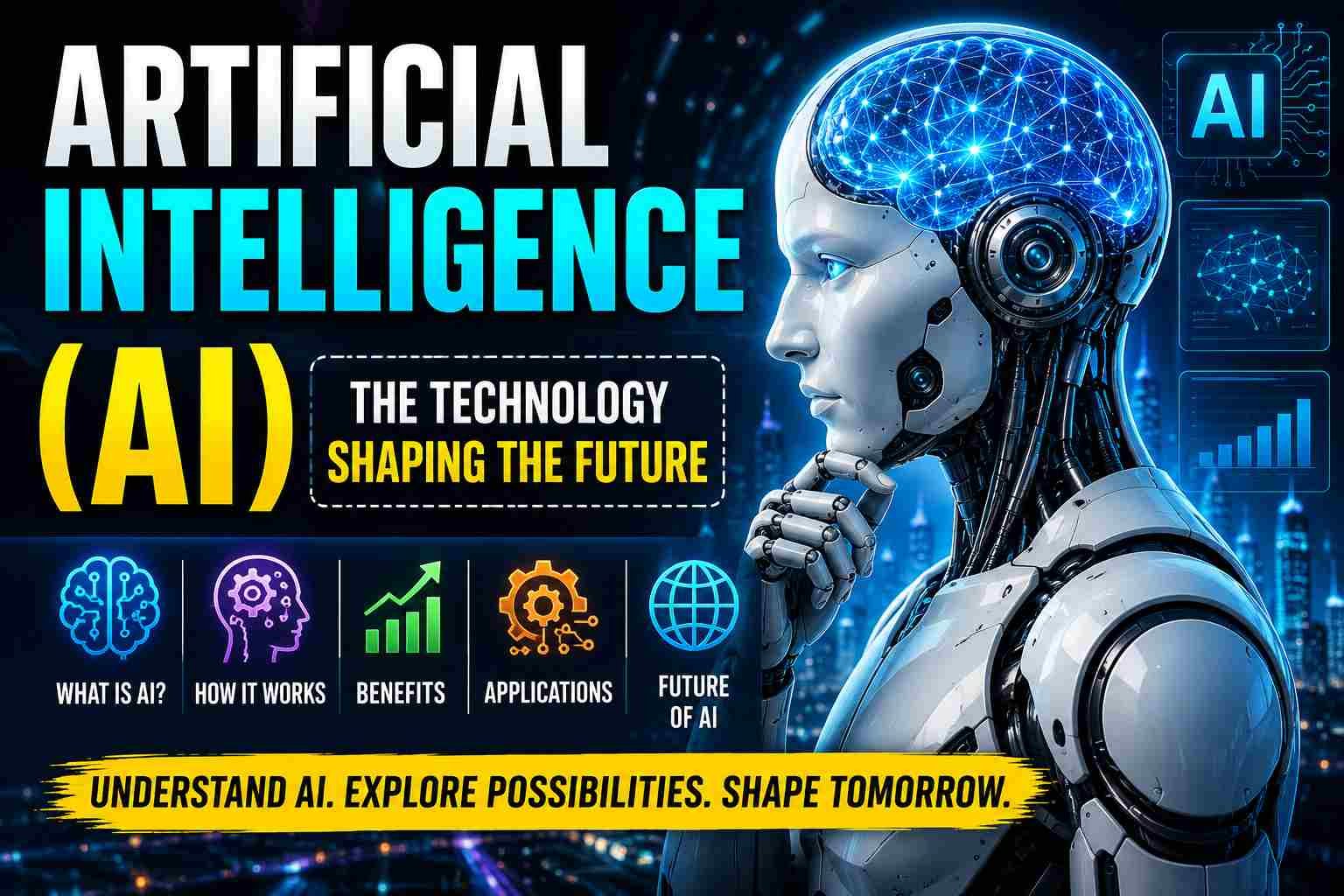
Artificial Intelligence (AI): The Technology Shaping the Future
Introduction
Artificial Intelligence (AI) is one of the most revolutionary technologies of the modern era. From smartphones and virtual assistants to self-driving cars and advanced medical systems, AI is transforming the way we live, work, and communicate. Today, businesses, students, content creators, and professionals use AI-powered tools to improve productivity, automate tasks, and make smarter decisions.
As AI technology continues to evolve, it is becoming an essential part of everyday life. Understanding what AI is, how it works, and its benefits can help individuals and organizations stay ahead in a rapidly changing digital world.
What is Artificial Intelligence?
Artificial Intelligence refers to the ability of machines and computer systems to perform tasks that typically require human intelligence. These tasks include learning, problem-solving, decision-making, language understanding, image recognition, and pattern analysis.
Unlike traditional software that follows fixed instructions, AI systems can analyze data, learn from experience, and improve their performance over time. This capability makes AI highly valuable across various industries.
How Does AI Work?
AI works by processing large amounts of data and identifying patterns within that data. Through techniques such as machine learning and deep learning, AI systems can make predictions, recognize objects, understand human language, and automate complex processes.
The basic workflow of AI includes:
-
Collecting data
-
Training AI models
-
Learning patterns
-
Making predictions
-
Improving through feedback
The more high-quality data an AI system receives, the better its performance becomes.
Types of Artificial Intelligence
1. Narrow AI
Narrow AI is designed to perform specific tasks. Examples include voice assistants, recommendation systems, and image recognition software.
2. General AI
General AI refers to systems capable of performing any intellectual task that a human can do. This level of AI has not yet been achieved.
3. Super AI
Super AI is a theoretical concept where machines surpass human intelligence in every field. While widely discussed, it remains a future possibility.
Benefits of Artificial Intelligence
AI offers numerous advantages across different sectors:
Increased Productivity
AI automates repetitive tasks, allowing people to focus on more important activities.
Better Decision Making
Businesses use AI to analyze data and make informed decisions faster.
Improved Customer Service
AI chatbots and virtual assistants provide instant support to customers.
Healthcare Advancements
AI helps doctors diagnose diseases, analyze medical images, and improve patient care.
Enhanced Creativity
Content creators use AI tools for writing, image generation, video editing, and graphic design.
Applications of AI
Artificial Intelligence is used in many industries, including:
-
Healthcare
-
Education
-
Finance
-
Marketing
-
E-commerce
-
Transportation
-
Entertainment
-
Cybersecurity
-
Agriculture
-
Manufacturing
Popular AI tools such as ChatGPT, image generators, and automation platforms demonstrate how AI is changing the digital landscape.
Challenges of AI
Despite its benefits, AI also presents challenges:
-
Data privacy concerns
-
Ethical issues
-
Job displacement in some industries
-
Bias in AI models
-
Security risks
Responsible development and regulation are important to ensure AI benefits society while minimizing risks.
The Future of AI
The future of AI looks promising. Experts predict that AI will continue to transform industries, improve automation, and create new opportunities for innovation. Future advancements may include smarter virtual assistants, more accurate healthcare systems, advanced robotics, and personalized education platforms.
As technology evolves, AI is expected to become even more integrated into everyday life, making processes faster, smarter, and more efficient.
Conclusion
Artificial Intelligence is no longer a futuristic concept—it is a reality that is reshaping the world around us. From improving productivity and healthcare to enhancing creativity and business operations, AI offers countless opportunities. While challenges remain, responsible use and continuous innovation will ensure that AI plays a positive role in building a smarter future.
For individuals, businesses, and content creators, understanding AI is becoming increasingly important. Those who learn and adapt to AI technology today will be better prepared for the opportunities of tomorrow.